


Ketamine, Spravato, and Therapy for Veterans: What’s Available Now?

Veterans exploring newer mental health treatments often encounter the words ketamine, Spravato, MDMA, and psilocybin in the same conversation. They are not interchangeable. Each has a different legal status, evidence base, clinical purpose, and level of availability.
Understanding those differences can help veterans and their families make safer, more informed choices.
Quick guide: what is available, and what is not
AVAILABLE NOW AT THE PEARL: Ketamine-assisted psychotherapy (KAP), trauma-informed talk therapy, psychedelic integration, and SoundSelf.
PLANNED FOR THE PEARL’S VETERAN-SERVICES PATHWAY BEGINNING IN 2027: Spravato (esketamine) for clinically eligible adults.
RESEARCH ONLY: Psilocybin-assisted and MDMA-assisted therapies remain investigational and are not routine clinical care. Join our newsletter for updates on research, regulatory developments, and the evolving path toward broader access to these medicines.
INTEGRATION IS ESSENTIAL: At The Pearl, preparation and integration are treated as core clinical components around eligible medicine-assisted care—not as optional add-ons.
Why these distinctions matter for veterans
Veterans may seek care for depression, post-traumatic stress disorder (PTSD), anxiety, grief, moral injury, substance-use concerns, chronic pain, or challenges related to reintegration. No single treatment is right for everyone, and “psychedelic therapy” is not one uniform service. Some options are established psychotherapy, some involve legally prescribed medicines used on-label or off-label, and others are still available only through research.
The safest question is not simply, “Is this psychedelic?” It is: “What exactly is being offered, for which diagnosis, with what evidence, under whose medical supervision, and what preparation and integration are included?”
Ketamine-assisted psychotherapy: available now for qualified patients
Ketamine is an FDA-approved anesthetic. When clinicians use ketamine for psychiatric conditions such as depression, that use is off-label—legal when prescribed by an appropriately licensed medical professional, but not an FDA-approved psychiatric indication for ketamine itself.
Research supports ketamine’s antidepressant effects, particularly for some people with treatment-resistant depression. The evidence for ketamine-assisted psychotherapy as a combined model is promising but still developing, and ketamine is not FDA-approved to treat PTSD.
At The Pearl, KAP is designed as a structured clinical process rather than a medicine-only appointment. Qualified patients complete an intake assessment, medical screening, and preparation. Medicine sessions are supervised by trained clinical professionals, and integration follows the experience so insights can be translated into daily life, relationships, and ongoing therapy.
For veterans, that structure matters. A medicine experience may create a temporary window of openness or psychological flexibility, but lasting benefit usually depends on what happens before and after the session.
Talk therapy remains foundational
Trauma-informed talk therapy remains a central part of evidence-based veteran mental health care. Depending on the person’s needs, therapy may address traumatic memories, depression, anxiety, moral injury, grief, anger, relationship strain, substance use, identity changes, or the transition from military to civilian life.
The Pearl offers individual, group, and couples therapy using approaches that may include cognitive behavioral therapy, EMDR, Internal Family Systems, EFT/tapping, somatic interventions, and substance-use counseling. Medicine-assisted care should complement appropriate ongoing treatment—not automatically replace it.
Integration is part of treatment, not an optional extra
Preparation helps a patient understand the treatment, establish intentions, plan for safety, and set realistic expectations. Integration is the deliberate process of making sense of the experience and connecting it to practical therapeutic goals.
Integration may include discussing emotions or memories that surfaced, identifying patterns, strengthening coping skills, repairing relationships, changing routines, and deciding what should be explored in future therapy. It is not a promise that every experience contains a hidden message, and it should not pressure a patient into accepting a clinician’s interpretation.
At The Pearl, integration is paired with KAP and can also support people processing past psychedelic experiences. For veterans considering any medicine-assisted treatment, preparation and integration should be treated as part of the care plan—not a wellness add-on after the fact.
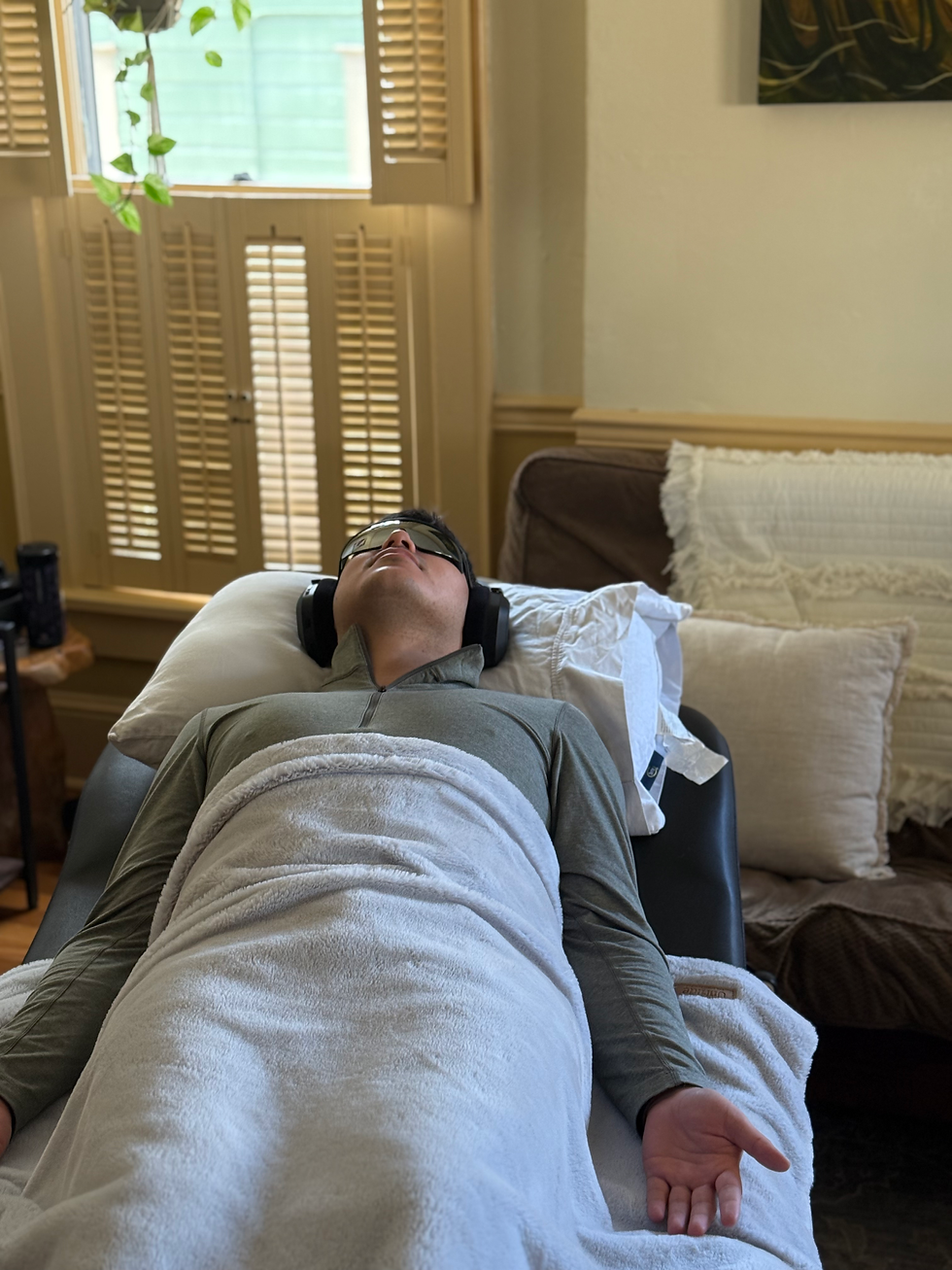
Where SoundSelf may fit
SoundSelf is an immersive audio-visual meditation experience that uses a person’s voice to influence sound and imagery in real time. At The Pearl, it may be used as a supportive tool for relaxation, self-exploration, or integration, including alongside low-dose ketamine when clinically appropriate.
SoundSelf is not a psychedelic drug, a replacement for psychotherapy, or a standalone treatment for PTSD or depression. Its role is best understood as a supportive experience within a broader, clinician-guided plan.
Spravato: FDA-approved for specific depression indications
Spravato is the brand name for intranasal esketamine, a molecule related to ketamine. It is FDA-approved for treatment-resistant depression in adults, either as monotherapy or with an oral antidepressant. It is also approved, together with an oral antidepressant, for depressive symptoms in adults with major depressive disorder and acute suicidal ideation or behavior. It is not FDA-approved for PTSD.
Spravato must be administered under a health care provider’s supervision in a certified treatment setting through the Spravato REMS program. Patients are monitored for at least two hours because of risks including sedation, dissociation, respiratory depression, increases in blood pressure, and misuse. Patients should not drive until the next day after a restful sleep.
The Pearl plans to make Spravato available through its veteran-services pathway beginning in 2027. Eligibility will depend on diagnosis, clinical screening, medical appropriateness, program requirements, and any applicable VA or insurance authorization.
Spravato is not the same as KAP. Spravato follows a specific FDA-regulated nasal-spray protocol for approved depression indications. KAP generally refers to psychotherapy supported by ketamine administered through another clinical route, with psychiatric use of ketamine considered off-label.
What changed with psilocybin at the VA?
On August 5th 2026, the U.S. Department of Veterans Affairs announced PIVOT, Psilocybin Intervention for Veterans Overcoming Treatment-Resistant Depression. The randomized controlled trial is designed for veterans with treatment-resistant major depressive disorder, with or without concurrent PTSD, and compares two psilocybin dose levels.
The VA said the trial will evaluate changes in depression, tolerability, and patient-reported outcomes. It is being conducted at five VA locations: Birmingham and Tuscaloosa, Alabama; Portland, Oregon; Philadelphia, Pennsylvania; and the VA Puget Sound system in Washington. The protocol uses pharmaceutical-grade psilocybin, psychological support, and FDA-informed safety procedures.
This is an important expansion of federal psychedelic research, but it does not mean the VA now offers psilocybin as routine treatment. At the time of the announcement, VA reported involvement in 20 active psychedelic-therapy trials and stated that clinical use outside research would be considered only after FDA approval.
Veterans interested in PIVOT should review the official trial information and speak with their VA care team. They should not stop current treatment or attempt to self-medicate with psilocybin.
What about MDMA-assisted therapy?
On May 26, 2026, the VA also announced a randomized, placebo-controlled trial of MDMA-assisted therapy for veterans with PTSD and alcohol use disorder. The study is expected to enroll approximately 80 veterans and compare MDMA-assisted therapy with identical psychotherapy plus an active placebo.
MDMA-assisted therapy remains investigational. It is not FDA-approved, and the VA announcement does not make it routine VA care. The trial is designed to study the medicine together with structured psychotherapy under controlled clinical conditions, not MDMA as a stand-alone intervention.
How the options compare
Treatment | Clinical/legal status | Availability |
Talk therapy | Established, evidence-based mental health care | Available now at The Pearl; VA access depends on eligibility and authorization |
Ketamine-assisted psychotherapy (KAP) | Ketamine’s psychiatric use is off-label; evidence for combined KAP is developing | Available now at The Pearl for qualified patients |
SoundSelf | Supportive integration and wellness tool; not a stand-alone treatment | Available now at The Pearl |
Spravato | FDA-approved for specified adult depression indications; not PTSD | Planned for The Pearl’s veteran-services pathway beginning in 2027 |
Psilocybin-assisted therapy | Investigational; VA PIVOT trial | Research only; not routine VA or Pearl care |
MDMA-assisted therapy | Investigational; VA clinical trial | Research only; not routine care |
How veterans can take the next step safely
Start with a licensed clinician who can evaluate symptoms, diagnoses, medications, substance-use history, cardiovascular risks, and other safety factors.
Ask whether the treatment is FDA-approved for your condition, used off-label, or available only through a clinical trial.
Choose a program that includes preparation, appropriate medical monitoring, psychotherapy when indicated, and post-session integration.
Confirm VA Community Care authorization or insurance coverage before treatment; availability does not guarantee coverage.
Avoid self-medication or unregulated psychedelic products.
Veterans receiving VA care can ask their VA clinician whether an established treatment, Community Care referral, or research opportunity may be appropriate. Community Care generally requires VA authorization before services are provided, and coverage rules vary.
A responsible path forward
The growing interest in ketamine and psychedelic therapies reflects a real need: many veterans continue to experience significant symptoms despite existing care. Innovation is important, but so are accuracy, informed consent, medical oversight, and honest distinctions between approved treatment, off-label care, supportive services, and research.
The Pearl’s approach brings those pieces together through trauma-informed talk therapy, KAP, preparation, integration, and supportive tools such as SoundSelf, with Spravato planned for the veteran-services pathway beginning in 2027. Psilocybin and MDMA-assisted therapies should be discussed as research, not as treatments already available in routine practice.
To learn whether current services may fit your needs, contact The Pearl for a clinical screening and program information.
If you are a veteran in crisis or concerned about one, call 988 and press 1, text 838255, or contact the Veterans Crisis Line. If there is an immediate danger, call 911 or go to the nearest emergency department.
This article is for educational purposes and is not medical advice. Treatment eligibility and availability may change. Decisions should be made with qualified health care professionals.
Sources and further reading


Comments